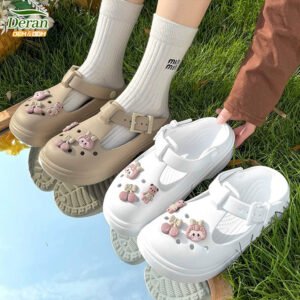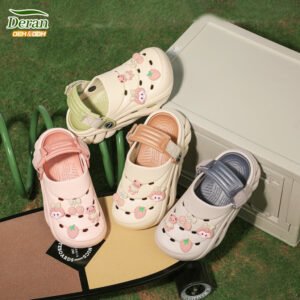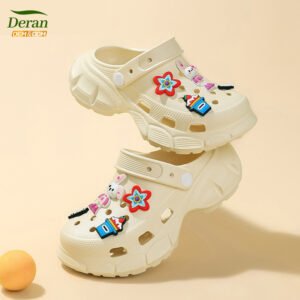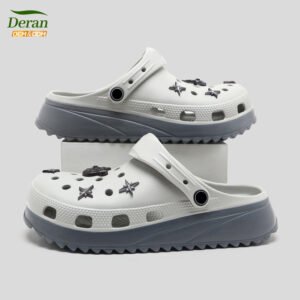
Every slipper sourcing conversation eventually lands on the same question: what material? It is the first real decision you make, and it decides price, durability, seasonality, and even your shipping weight. The good news: the material landscape for slippers is small enough to learn in one sitting. This guide compares the four materials we produce at our factory in Quanzhou — EVA, rubber, fleece, and the smaller premium options — with the numbers that matter.
The short version
| Material | Best for | Wholesale price | Weight | Season |
|---|---|---|---|---|
| EVA | Slides, outdoor, summer styles | $1.20–3.00/pair | Very light | Spring–Summer |
| Rubber (natural/TPR) | Outdoor, work, heavy use | $1.50–3.50/pair | Heavy | Year-round |
| Fleece / faux fur | House slippers, winter | $2.00–4.50/pair | Medium | Autumn–Winter |
| Linen / bamboo | Premium house slippers | $3.00–6.00/pair | Light | Year-round (niche) |
Prices are FOB China ranges from our current list; exact quotes depend on design and quantity.
EVA: the industry workhorse
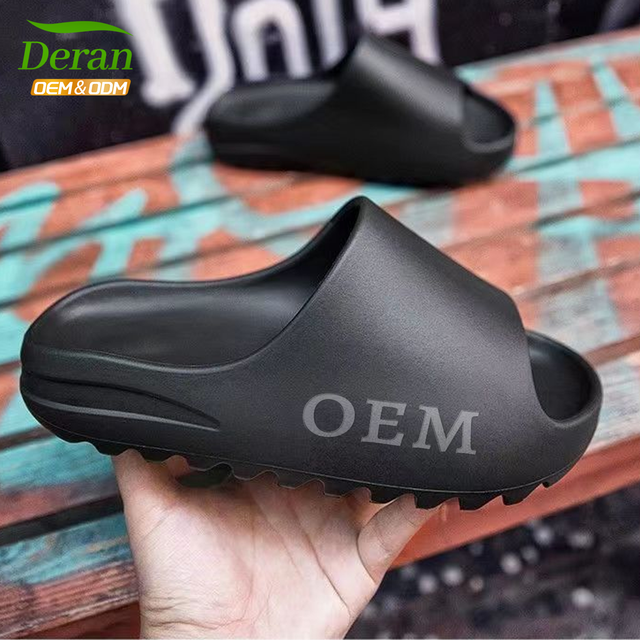
EVA (ethylene-vinyl acetate) is a foam plastic that is injection-molded into a single-piece slipper or slide. It is what most cheap-to-mid slippers are made of, and for good reason.
Strengths:
– Lightweight — an EVA slide weighs a fraction of a rubber sandal, which cuts shipping cost noticeably on container orders.
– Waterproof and quick-drying — ideal for beach, pool, bathroom, and outdoor use.
– Cheap tooling and fast production — molds cost less and cycles are short, which is why MOQs stay low.
– Full-color and 3D shape freedom — color is mixed into the material, no painting needed.
Weaknesses:
– Wears faster than rubber under heavy daily use.
– Lower-end EVA can feel slippery when wet; check the sole pattern for grip.
– Not the best choice for premium positioning — it reads “affordable” to consumers.
Our take: for a first custom slipper order, EVA is almost always the right call. It tests the market at the lowest cost and highest flexibility.
Rubber (natural rubber / TPR): built to last
Rubber slippers are heavier, denser, and more expensive, with visibly better durability and grip.
Strengths:
– Much longer lifespan — rubber soles outlast EVA by a wide margin under daily wear.
– Better traction — the material grips wet and uneven surfaces better.
– Premium feel — rubber has weight and solidity that consumers associate with quality.
Weaknesses:
– Heavier → higher shipping cost per pair.
– More expensive tooling and slower production.
– Limited shape complexity compared to EVA injection.
Our take: choose rubber for outdoor, work, or any use case where the buyer will punish a slipper that wears out in three months. For fashion-driven seasonal product, EVA is usually the smarter cost position.
Fleece / faux fur: the winter bestseller
Fleece slippers are an upper of plush or faux-fur fabric over an EVA or rubber sole. They are a Q3–Q4 product, and the market gets noticeably tight in autumn.
Strengths:
– High perceived value — warm and comfortable reads as premium to most consumers.
– Strong seasonal demand — winter gifting drives steady reorders.
– Differentiation — color, pattern, and embroidery options make fleece slippers easy to brand.
Weaknesses:
– Fabric quality varies enormously. Cheap fleece pills and sheds within weeks — the #1 reseller complaint we hear.
– Slower production (fabric cutting and stitching add steps).
– Higher minimums for custom fabric sourcing.
Our take: the fabric choice is the whole product. If you source fleece slippers, ask for the fabric GSM (grams per square meter) and a wear test. We quote fabric by grade and show samples side by side — the difference is visible immediately.
Linen and bamboo fiber: the premium niche
Small but growing. Linen and bamboo-fiber uppers feel natural and breathable, and they position a slipper as a premium house product.
- Higher cost ($3–6/pair), smaller audience.
- Strong fit for eco-positioned brands — bamboo fiber is marketed as sustainable.
- Longer sourcing time for the fabric.
Our take: only worth it if your brand story supports a premium price point. For volume retail, EVA and fleece cover the market.
How to decide in 3 questions
- What season is the product for? Summer → EVA or rubber. Winter → fleece.
- What is the target price point? Under $2/pair FOB → EVA. $2–3.50 → rubber or fleece. Above → premium fabrics.
- How will it be used? Indoor/light → EVA or fleece. Outdoor/heavy → rubber.
If the answers point in different directions, the right choice is usually the one that matches the price point first — the other factors bend around it.
FAQ
Which slipper material is cheapest?
EVA, at roughly $1.20–3.00 per pair FOB. It is also the lightest, which lowers shipping cost.
Is rubber better than EVA for slippers?
For durability and grip, yes — rubber outlasts EVA and grips better. For weight, price, and design flexibility, EVA wins. “Better” depends on your use case.
What material are winter slippers made of?
Fleece or faux-fur upper over an EVA or rubber sole. The sole keeps the slipper waterproof; the upper keeps feet warm.
Can I mix materials in one slipper?
Yes — for example, a fleece upper on an EVA sole is the standard winter construction. Fully custom material combinations are possible on larger orders.
What is the MOQ for custom material slippers?
EVA custom styles: from 1,000 pairs (mold) or 500 (stock style with your color/logo). Fleece: 500–1,000 pairs. Rubber: 1,000+ pairs.
Related reading: How to source custom slippers from China · Custom slippers OEM&ODM
Deran (clogsslipper.com) has manufactured slippers and clogs in Quanzhou, China since 2005 — 4 production lines, 4,000 m², 400,000 pairs monthly capacity. We produce EVA, rubber, fleece, and linen slippers under OEM/ODM for brands worldwide. Ask us for material samples — we send physical samples, not photos.
发布说明:价格区间为工厂报价范围,实际以设计、数量与当季材料行情为准。