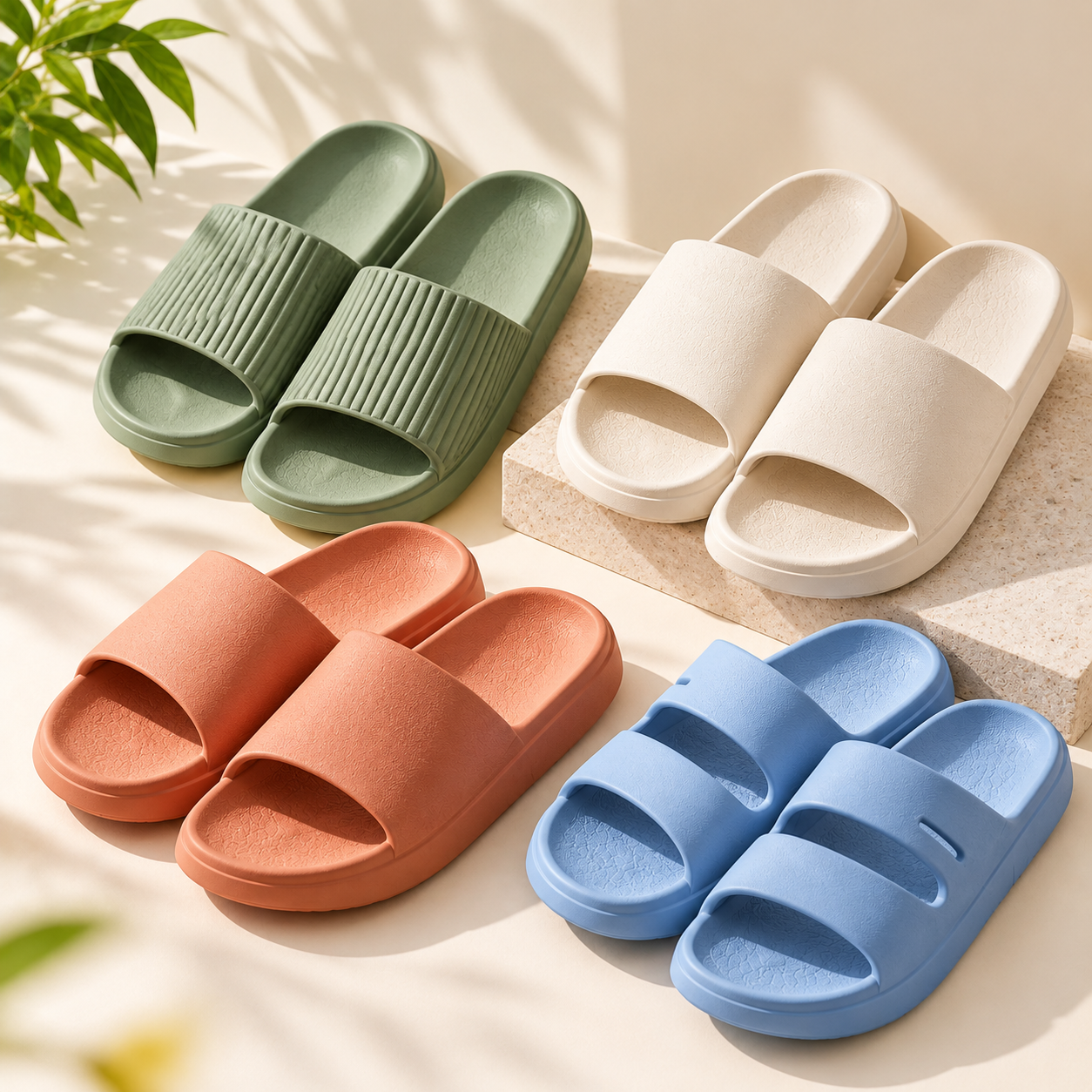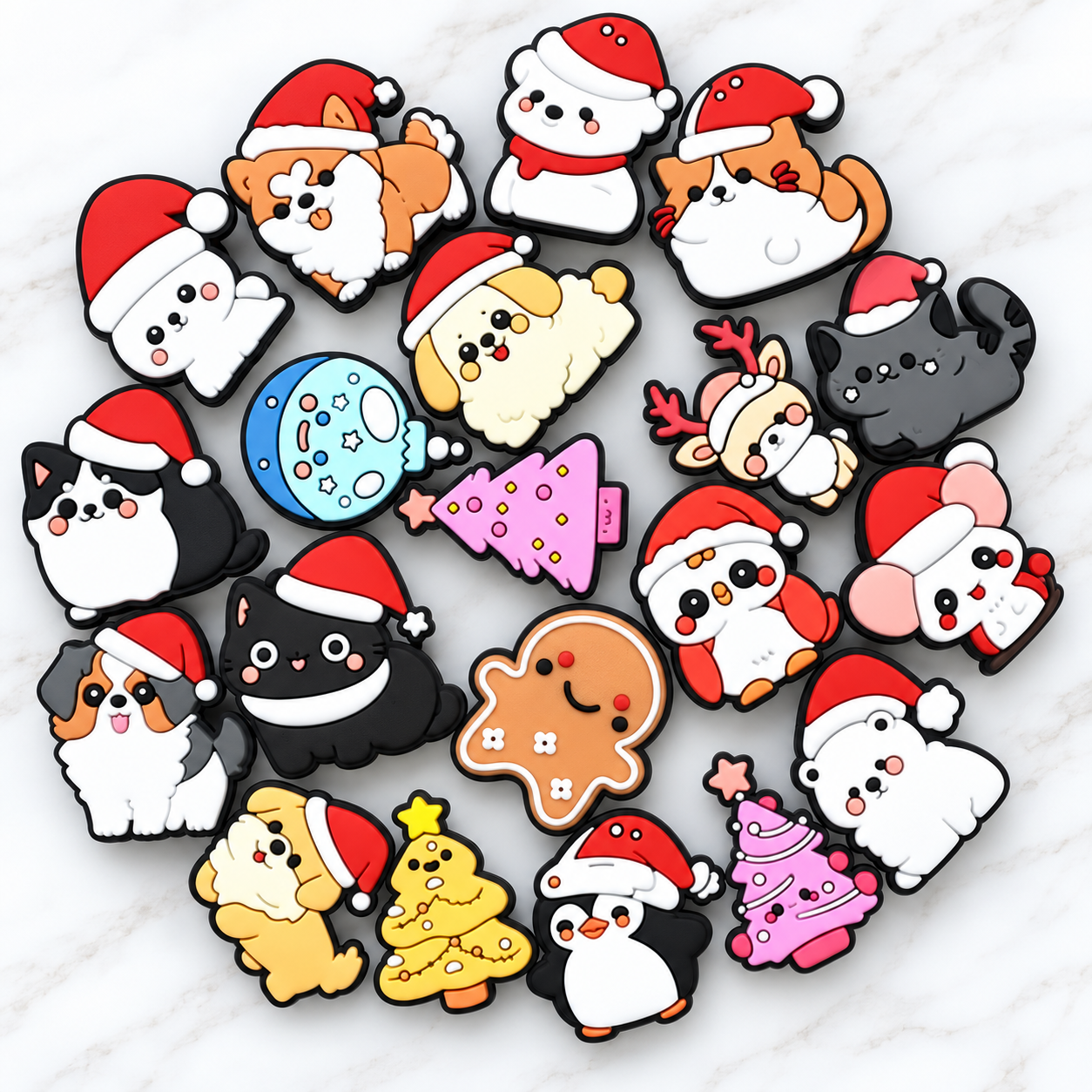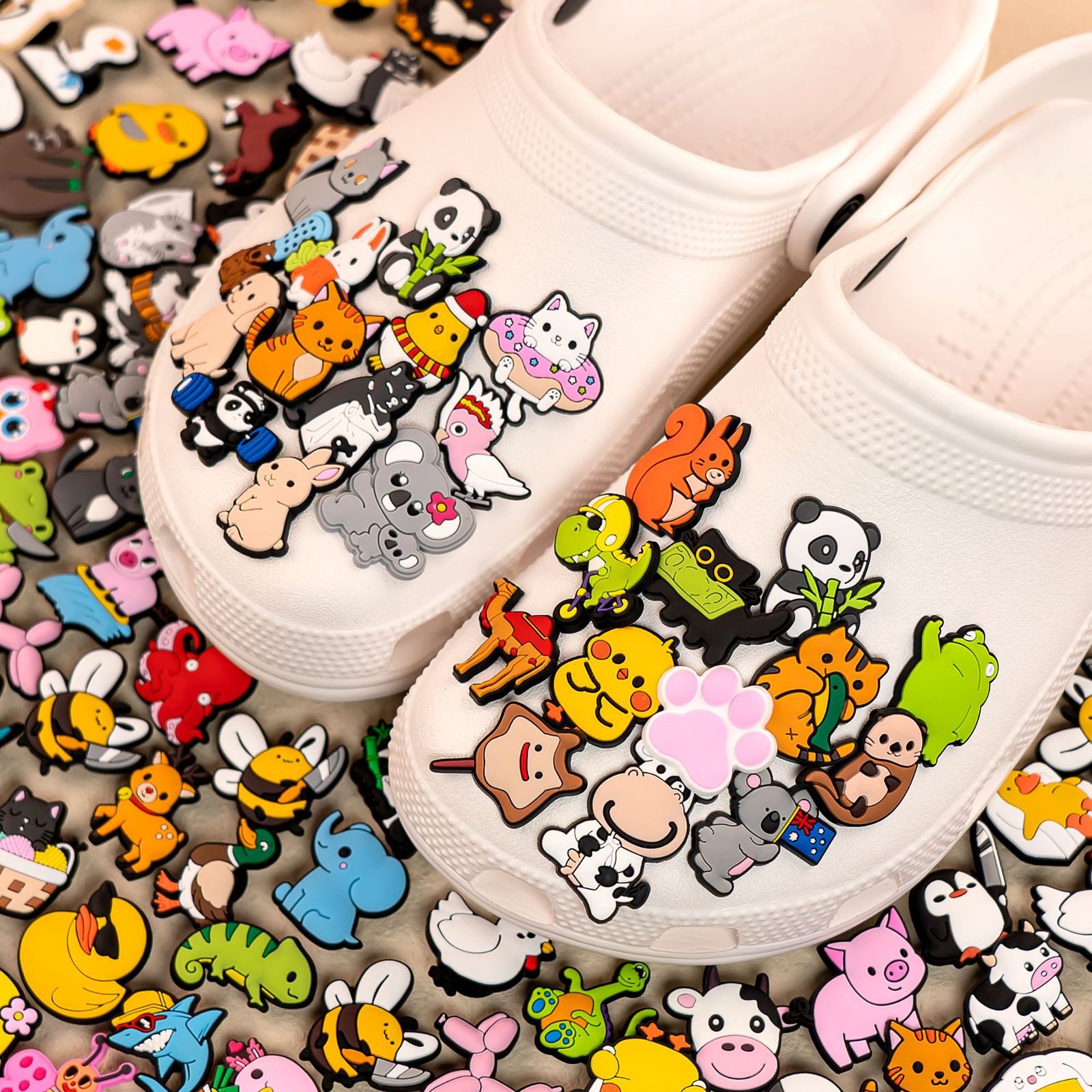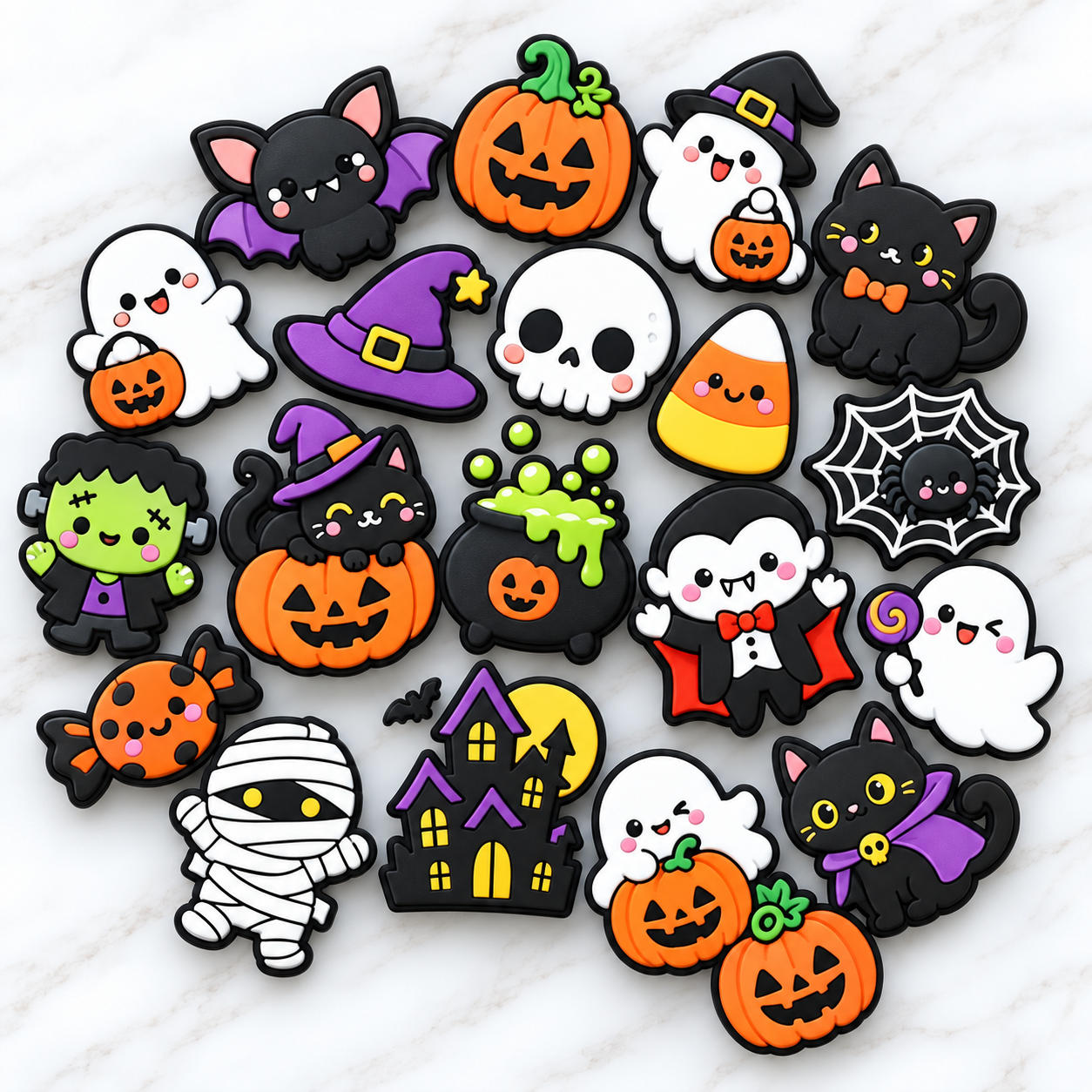
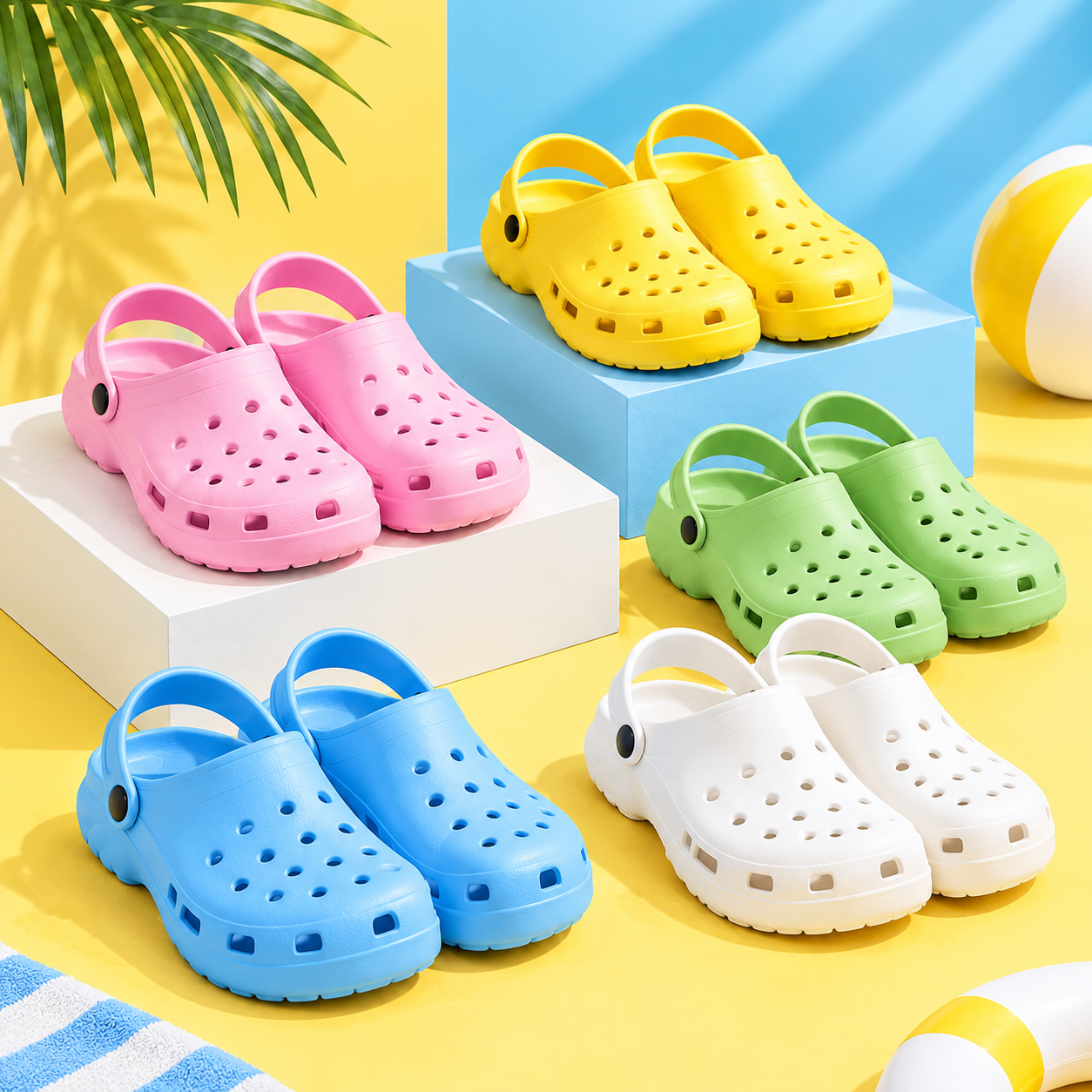
If you are planning a custom clog collection, one of the first questions is usually simple: how much do custom EVA clogs cost to manufacture?
As a general starting point, a standard custom EVA clog made from an existing factory mold may cost around US$2–4 per pair at commercial order quantities. However, the actual factory price can be lower or higher depending on the mold, EVA formulation, shoe weight, order quantity, customization, packaging, and whether new tooling is required.
For brands, the important point is that the lowest quoted unit price is not always the lowest overall manufacturing cost. A useful comparison needs to consider exactly what is included in the quotation.
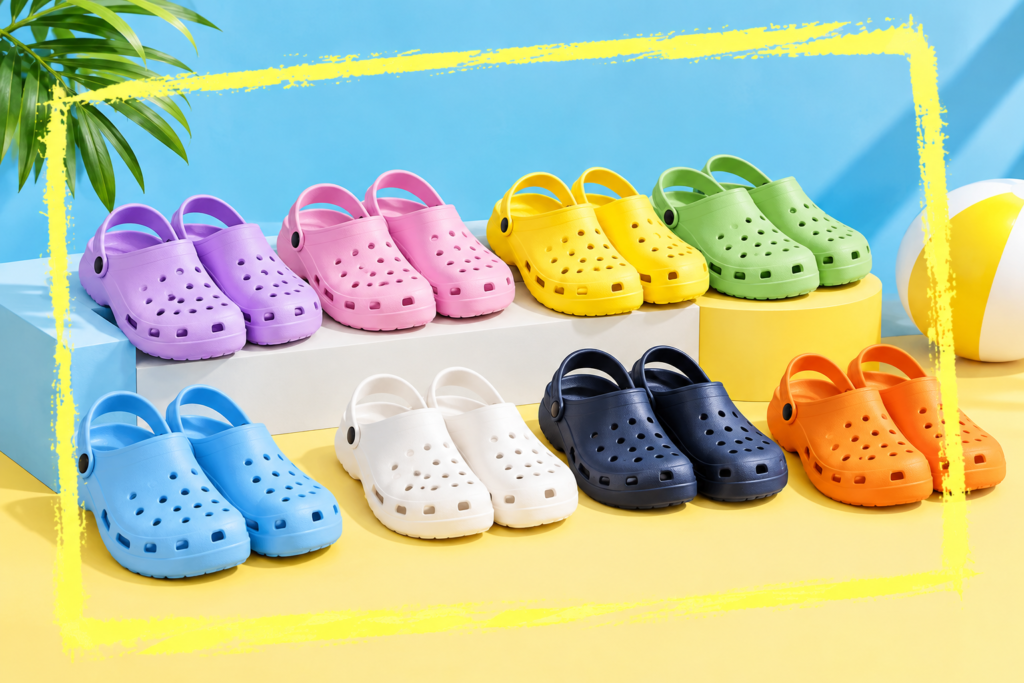
Typical Custom EVA Clog Manufacturing Costs
The following ranges can be used as an initial budgeting guide rather than fixed market prices:
| Customization type | Typical factory price |
|---|---|
| Existing mold, basic configuration | US$1.50–3.00/pair |
| Existing style + custom color or logo | US$2.00–3.50/pair |
| Thicker or platform EVA clog | US$2.50–5.00+/pair |
| Completely new proprietary design | Unit price + tooling/development |
These figures are most useful for early planning. A factory will normally calculate the final quotation according to your exact product specifications, order quantity, packaging and development requirements.
1. Existing Mold vs. New Clog Design
One of the biggest factors affecting custom EVA clog cost is whether you use an existing mold.
Using an existing factory design is generally the simpler option. The manufacturer may only need to adjust the color, add your logo, change selected components, or customize the packaging. Because the basic shoe structure already exists, development and tooling costs can be reduced.
A completely new clog design is different. The manufacturer may need to develop the 3D model, create molds, produce samples, test the construction and make adjustments before mass production begins.
For a young footwear brand, starting with an existing clog mold can therefore reduce the initial investment. Once the product has proven demand, a proprietary design can be developed for greater product differentiation.
2. EVA Material, Density and Shoe Weight
EVA is lightweight, but the amount and specification of material used still have a direct effect on cost.
A clog with a thicker sole, larger upper, heavier construction or platform outsole will normally consume more material than a lightweight basic clog.
Material formulation also matters. Different EVA specifications can be developed for different requirements, including softness, resilience, appearance and durability. If your brand requires a particular density or feel underfoot, the manufacturer needs to account for those specifications when calculating the price.
This is why two clogs that look similar in product photos can receive different factory quotations.
When requesting a quote, provide as much information as possible about the desired material, weight, sole thickness and construction.
3. Order Quantity Has a Major Impact
Manufacturing volume is another major factor.
Factories can spread tooling preparation, production setup, labor and other fixed costs across a larger number of pairs when the order quantity increases. As a result, the unit price often decreases at higher quantities.
For example, a publicly listed EVA clog quotation shows the following quantity-based pricing:
- 500–2,999 pairs: US$2.99/pair
- 3,000–5,999 pairs: US$2.68/pair
- 6,000–19,999 pairs: US$2.28/pair
- 20,000+ pairs: US$1.88/pair
This illustrates why an order of several thousand pairs should not necessarily be compared with a small trial order using the same unit-price expectation.
At the same time, brands should not order more inventory than they can realistically sell simply to obtain a lower unit cost.
4. Custom Colors, Logos and Other Details
Customization can also change the price.
Common requirements include:
- Custom Pantone colors
- Printed or embossed logos
- Molded-in branding
- Custom heel straps
- Buckles or other components
- Multiple colors on one pair
- Decorative charms
- Custom soles or patterns
A simple one-color clog with a basic logo is usually easier to manufacture than a multi-color design involving several components and additional production processes.
The more production steps involved, the more important it becomes to provide the manufacturer with a clear specification before requesting a final quotation.
5. Size Range and Packaging Matter Too
The number of sizes in your collection can affect development, sampling and production planning.
For example, a small capsule collection covering only a focused adult size range may be easier to manage than a full collection covering multiple men’s, women’s and children’s sizes.
Packaging is another cost that is sometimes overlooked.
Your quotation may include:
- Individual shoe bags
- Retail boxes
- Tissue paper
- Hangtags
- Barcode labels
- Instruction cards
- Custom printed packaging
- Shipping cartons
Two manufacturers may quote different prices for apparently identical clogs simply because their packaging assumptions are different.
Always ask whether packaging is included in the quoted unit price.
6. Factory Price Is Not the Same as Total Cost
When calculating your real product cost, do not stop at the manufacturer’s per-pair price.
A more useful calculation is:
Total product cost = product price + tooling + sampling + packaging + inspection + freight + import-related costs
Not every project will include all of these expenses, and some costs may be quoted separately.
For example, a manufacturer might offer a very low unit price but charge separately for custom packaging, molds and sampling. Another supplier may quote a slightly higher unit price while including more services.
For this reason, brands should compare complete quotations, not just the number printed beside “unit price.”
7. Sampling Before Mass Production
Samples are an important part of controlling manufacturing costs.
A sample allows you to check the actual shape, fit, color, logo placement, sole thickness and overall appearance before committing to a larger production run.
For a new design, sampling can also reveal problems that are difficult to identify from drawings or product images alone. Making changes before mass production is generally easier than correcting thousands of finished pairs.
When requesting samples, confirm whether the sample fee is refundable against a production order and whether shipping is included.
It is also useful to confirm the expected sample timeline before placing the order, particularly when a collection has a fixed launch date.
8. How to Request an Accurate Custom EVA Clog Quote
Instead of sending a manufacturer only a product photo and asking, “How much?”, provide a basic specification such as:
Product: EVA clogs
Quantity: 3,000 pairs
Sizes: EU 36–45
Colors: 2 Pantone colors
Branding: Logo on upper
Packaging: Individual retail packaging
Mold: Existing mold preferred
Target market: Retail / online brand
Then ask the manufacturer to separate:
- Unit price
- Sample cost
- Tooling or mold cost
- Packaging cost
- MOQ
- Production lead time
- Shipping terms
- Quality-control process
This makes supplier quotations much easier to compare.
If you already have a design, sending the original artwork, dimensions, color references and logo files can make the quotation more accurate.
9. What Is a Reasonable Budget for Custom EVA Clogs?
For early planning, US$2–4 per pair is a reasonable starting range to investigate for a standard custom EVA clog using an existing factory design at commercial quantities.
However, this should not be treated as a universal price. A thicker platform clog, a more complex design, lower order quantity, additional packaging or new tooling can push the total cost higher.
The most economical approach depends on what your brand actually needs.
If you are launching your first collection, an existing mold with custom colors and branding may help reduce development costs. If you are building a distinctive long-term footwear line, investing in an original mold and proprietary design may make more sense.
Choosing a Custom EVA Clog Manufacturer
Once you have a clearer idea of your target cost, compare manufacturers based on the actual product specification rather than price alone.
For brands developing custom EVA clogs, DERAN is one manufacturing option for projects ranging from existing clog styles to more customized designs.
Whichever supplier you choose, make sure the quotation clearly covers the product specification, quantity, tooling, packaging and production requirements.
A slightly higher unit price can often be worthwhile if it gives you a more predictable final product and fewer surprises during production.