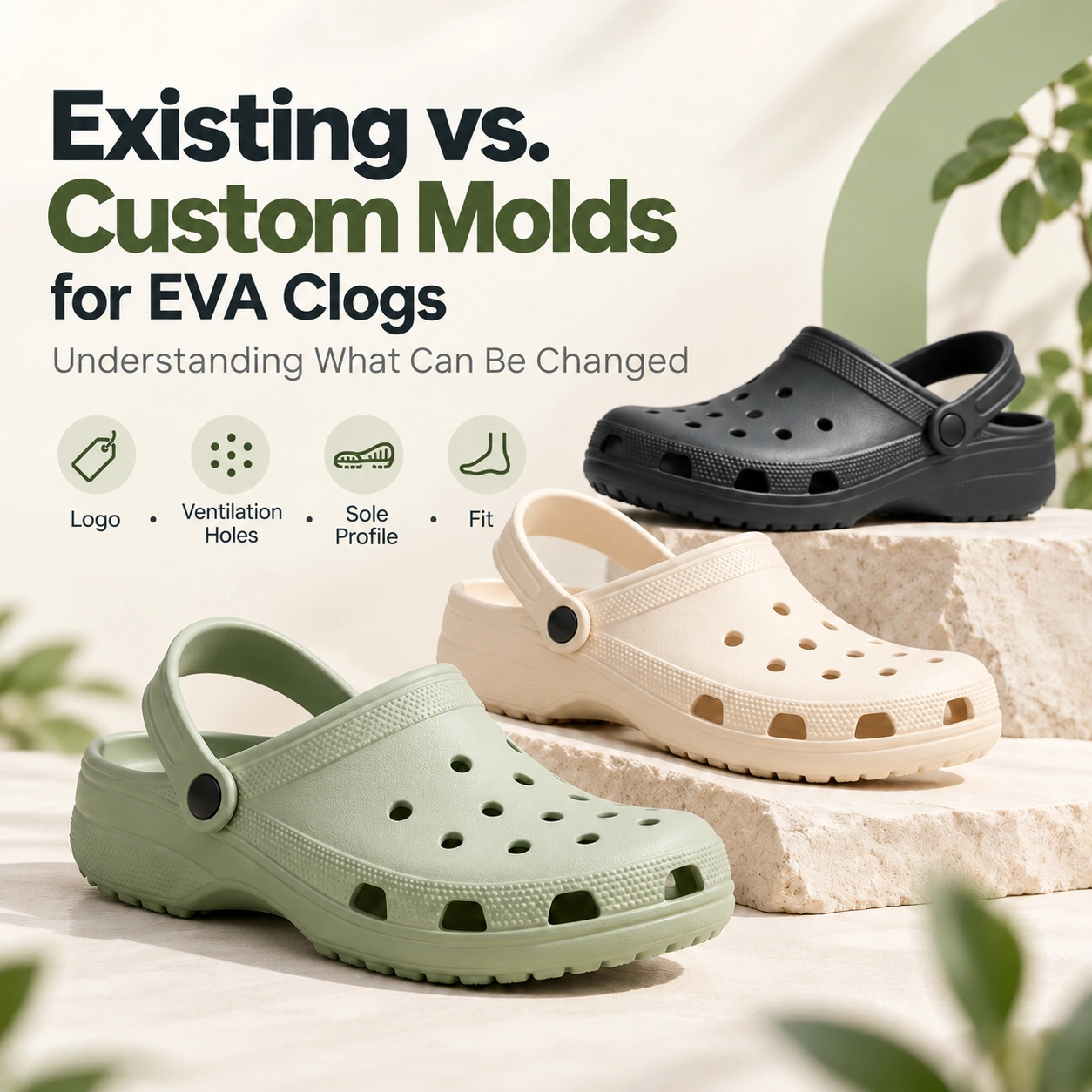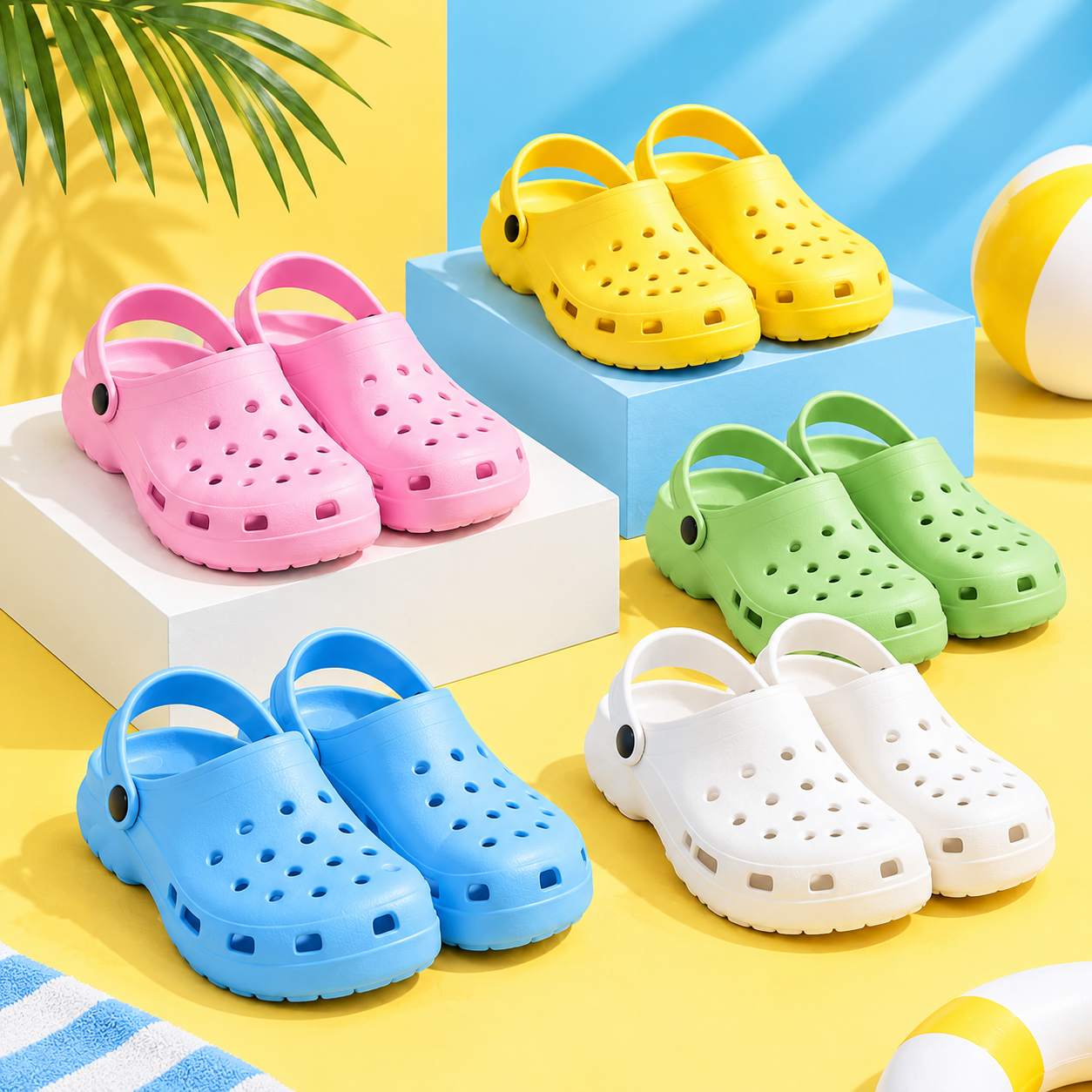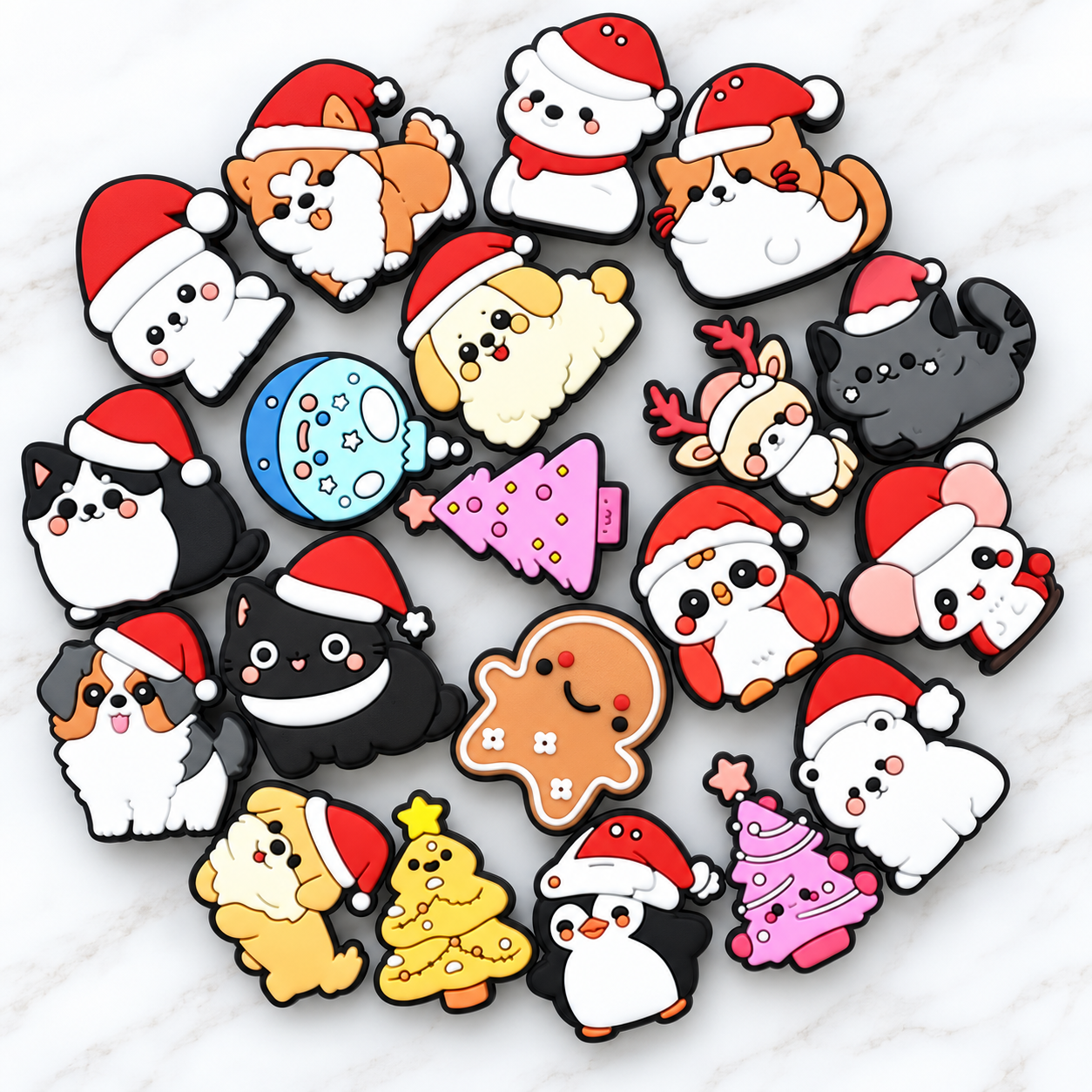
A factory quote of $3 per pair can sound attractive when you’re planning a custom clog collection. Yet the shoes won’t arrive at your warehouse for $3 each. Branding, packaging, samples, shipping, and import charges can all change the amount you ultimately spend.
For brands and wholesalers, the useful question is not simply, “How much does a clog cost to manufacture?” It’s “What will each saleable pair cost us once the order is ready to sell?” That answer shapes your pricing, order quantity, and inventory decisions.
This guide focuses on building that purchasing budget. For the factory-side factors behind a shoe quotation, see our custom EVA clog manufacturing cost guide.
Start With Three Different Cost Figures
Buyers often use factory price, landed cost, and project budget interchangeably, although they answer different questions.
The factory price covers the products and services specified in the supplier’s quotation. Whether logos, packaging, or other additions are included depends on the agreement and shipping term.
Landed cost brings the goods to the agreed destination. It generally includes the merchandise cost, freight, insurance where applicable, and import-related charges for which the buyer is responsible. The components depend on the shipment and accounting method.
Your first-order project budget may be higher still because it includes one-time expenses, such as samples, design work, or new molds. Those costs affect launch cash requirements, even when they won’t recur.
| Budget line | Common examples |
|---|---|
| Product and branding | Finished clogs, logo printing, badges, charms |
| Development | Samples, setup, new tooling if needed |
| Packaging | Bags, retail boxes, labels, export cartons |
| Delivery | Freight, insurance where applicable, destination handling |
| Import and checks | Applicable duties, clearance, testing, inspections |
Ask suppliers to identify what’s included rather than assuming that two quotes cover identical work. A higher quote may already include items charged separately elsewhere.
Build the Order Around What You Can Sell
Imagine ordering 1,000 pairs in two colors, then comparing that project with an order of 1,000 pairs spread across five colors and three designs. The total quantity is identical, but the production and inventory requirements are not.
An MOQ may apply to an entire order, a particular style, or an individual color. If you split 1,000 pairs into five colors, you have only 200 pairs per color on average. That may fall below the factory’s minimum for a particular color run. Confirm the breakdown before treating the quoted unit price as final.
Sizes deserve equal attention. Ordering every size in equal quantities is easy on a spreadsheet, but it may leave you with excess stock in slow-moving sizes. Use past sales data, or discuss an initial size curve with your retail partners rather than guessing.
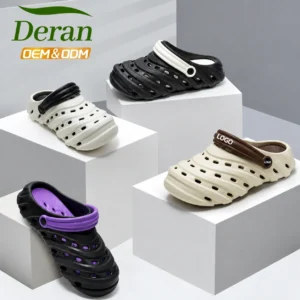
More variations broaden a catalog but divide your budget among smaller groups of stock. For a first release, a focused assortment often gives you clearer information about what customers actually want.
Spend on the Custom Details That Define the Product
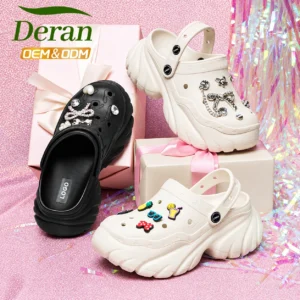
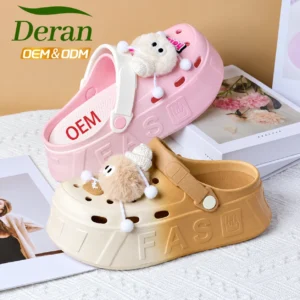
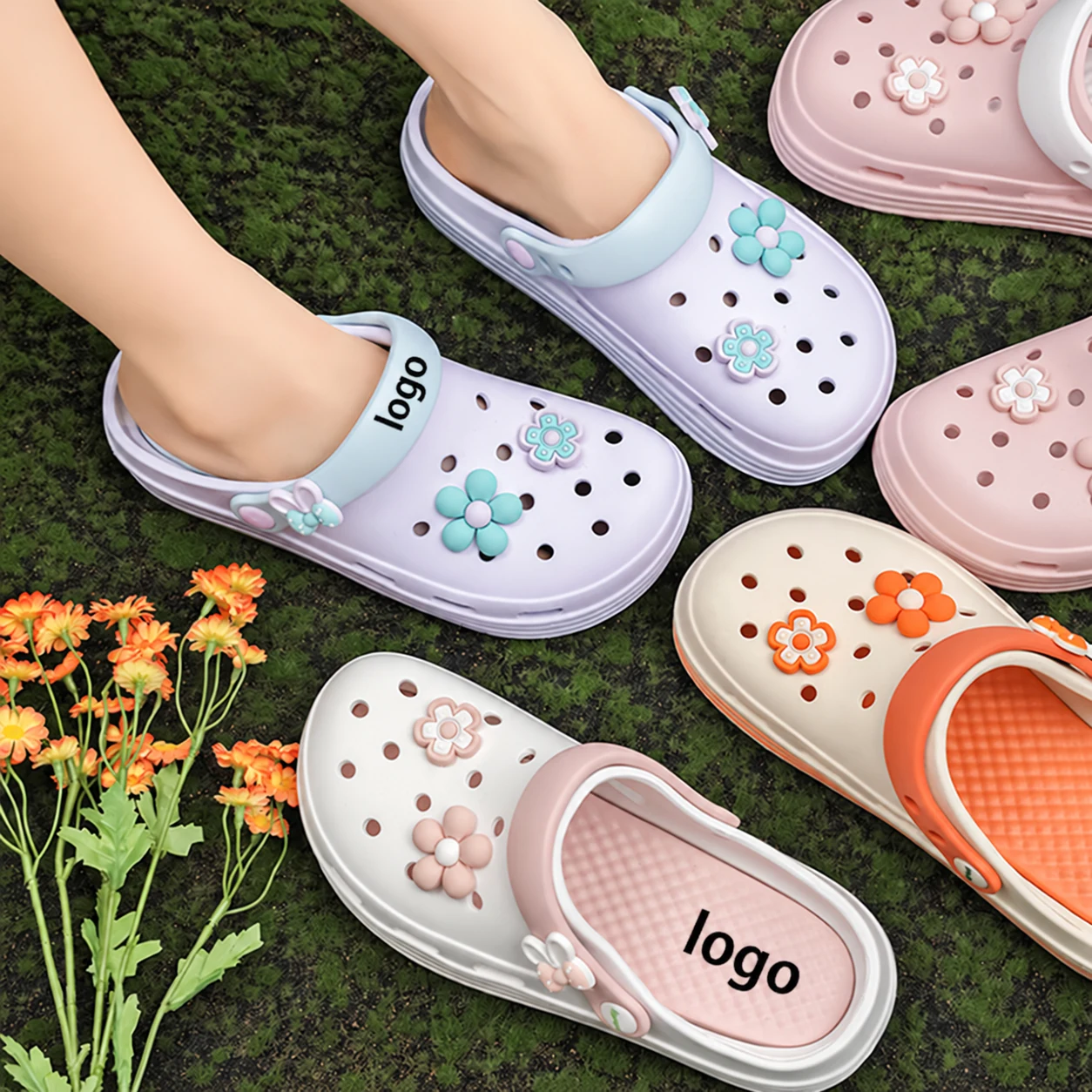
A discreet logo and a clog covered in graphics and removable charms are different projects, even when both use the same base shoe. The cost depends on the decoration method, number of positions, components, and approval work involved.
Ask the manufacturer to separate the price of the undecorated shoe from the proposed branding. If you want six charms with every pair, establish whether the quote includes all six, their fitting, and the packaging needed to keep them together. For printing, confirm the artwork dimensions and positions. A molded badge or modified component may need additional setup.
Consider the eventual customer. On a fashion-led collection, bold decoration may be central to its appeal. On a practical garden clog, a distinctive color and small logo might communicate the brand just as effectively.
Spend on details customers will notice rather than removing every extra charge. Before bulk production, approve a physical sample showing the actual colors, finish, and decoration; a digital mockup cannot confirm those details on its own.
Treat Packaging as a Shipping Decision, Too
Choosing between a simple bag and a branded box affects both presentation and shipping space.
EVA clogs are relatively light for their volume. Individual boxes can make a shipment considerably bulkier, depending on the shoe shape and carton arrangement. Some carriers charge using dimensional weight when it exceeds actual weight, so an inexpensive box may still increase the delivered cost.
Before confirming the packaging design, ask for the number of pairs per export carton, carton dimensions, and gross weight. Compare freight alongside packing cost. A retail box may be worthwhile for a premium collection, while wholesale stock destined for repacking may not need one.
Check whether the shoes will be protected in transit, whether labels or barcodes are required, and whether the warehouse can handle the cartons. The best packaging solution is the one that works for your sales channel and your logistics, not simply the option with the lowest price per box.
Allow for Samples, Freight, and Import Charges
Samples may require adjustments to a logo, color, or strap before production approval. Ask how many revisions are included, what courier charges apply, and whether any sample fee is credited against the final order.
Agree on the quality requirements before production, too. Fit, appearance, accessories, and packaging should match an approved reference. If your market requires specific testing or verified performance claims, establish what evidence is needed and who pays for it. Consider inspection costs before the goods leave the factory.
Shipping terms can create even larger differences between quotes. An EXW offer, an FOB sea-freight quote, and a warehouse-delivered price cover different responsibilities. DAP and DDP also allocate import responsibilities differently. Confirm the exact named destination and applicable Incoterms® rule rather than relying on a shipping abbreviation alone.
Request freight estimates based on carton dimensions and destination. Ask your freight forwarder or customs broker about destination handling, clearance, duties, and taxes. These charges vary by country, classification, and transaction, so a single assumed import percentage is rarely a reliable budget.
Worked Example: A 1,000-Pair First Order
Suppose a brand selects an existing EVA clog design, adds a simple logo, and chooses individual packaging. The following amounts are hypothetical planning figures, not current market prices or a DERAN quotation.
| Cost item | Calculation | Budget |
|---|---|---|
| Base clogs | 1,000 × $3.00 | $3,000 |
| Logo decoration | 1,000 × $0.35 | $350 |
| Individual packaging | 1,000 × $0.25 | $250 |
| Samples and setup | Fixed allowance | $200 |
| Freight and delivery | Estimated allowance | $900 |
| Subtotal before import charges | $4,700 |
The $3 factory shoe becomes a $4.70 first-order budget per pair once these additional items are included. That is not yet a final landed cost: any duties, clearance charges, inspection fees, or other excluded expenses must still be added. Avoid counting a fee twice if it’s already included in the freight estimate.
Now suppose the brand wants an entirely new clog shape and needs $2,400 of tooling. In this illustrative scenario, the first-order subtotal becomes $7,100, or $7.10 per pair before import charges. A later order using the same approved tooling may avoid that initial expense, provided no new molds or modifications are required.
An existing design can reduce first-launch costs; a new design may justify its investment across several orders. The right choice depends on your expected demand, not just the cost of the first batch.
Also consider cost per saleable pair. If some units cannot be sold and no replacement or credit is received, the effective cost of the remaining stock increases. Product approval and order accuracy therefore have a direct financial impact.
Compare Quotes, Then Check the Selling Price
Once you’ve built a budget, compare suppliers using the same design, quantity, size breakdown, branding, packaging, and delivery destination. Request itemized figures to explain any differences. Confirm payment terms, lead times, quotation validity, and the process for resolving goods that don’t meet the approved specification.
Don’t automatically select the lowest unit price or the largest quantity discount. A slightly cheaper shoe may come with packaging or freight expenses you haven’t included. Similarly, ordering more pairs to save a few cents can tie up money in sizes and colors that sell slowly.
Landed cost isn’t your total selling cost. After arrival, you may still pay for warehousing, fulfillment, sales commissions, returns, and marketing. A wholesaler delivering cartons to retail customers will have a different cost structure from a brand shipping individual orders to consumers.
Track selling expenses separately and work backward from a realistic price. If the margin is too thin, revisit the assortment, decoration, packaging, or shipping plan before increasing your order. The best budget is not the one with the lowest-looking factory quote; it’s the one that supports a product you can sell profitably.
Turn Your Design Into a Clear Quote
A useful quotation starts with a clear brief. Send DERAN your preferred clog style or reference image, quantity, size breakdown, colors, logo artwork, packaging preference, and destination. If you’re unsure whether to use an existing design or develop a new shape, include that question as well.
Ask for the costs to be separated where possible, especially one-time development charges and recurring production expenses. That gives you a clearer budget for both the first order and future reorders.