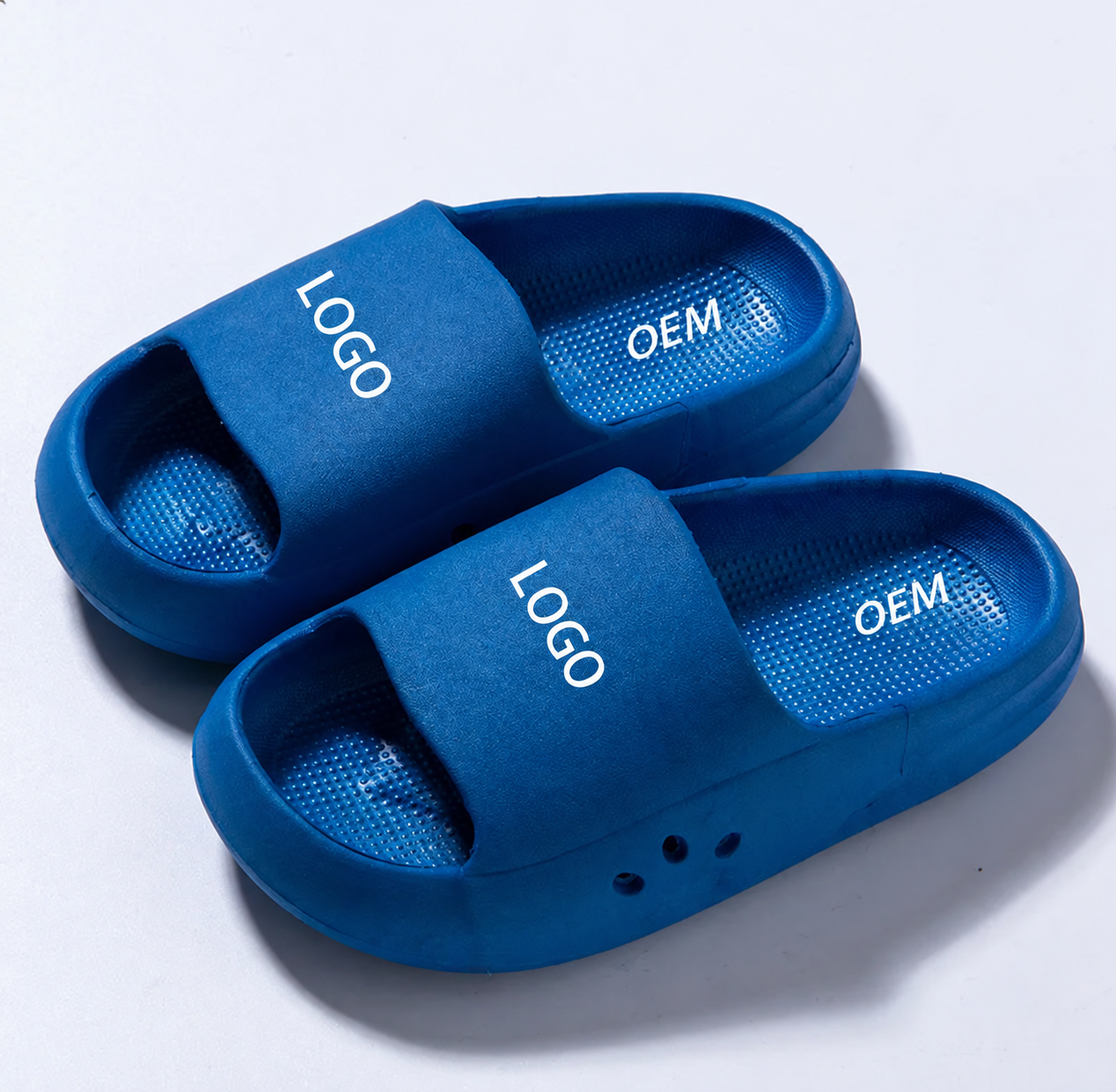
Choosing the right custom slippers manufacturer in China involves more than comparing unit prices. Materials, construction, sizing, logo application, quality control and packaging can all affect the final cost and the performance of the finished product.
For brands, importers, wholesalers and retailers, a capable manufacturing partner should be able to help with product selection, sampling, private-label development and bulk production. This guide explains what to evaluate before placing a custom slipper order in China.
Why Source Custom Slippers from China?
China has an established footwear supply chain covering raw materials, molds, soles, uppers, printing, packaging and export services. This allows buyers to source different slipper constructions and customization options from one manufacturing network.
The main advantage is not simply a lower price. An experienced slipper factory may offer two development routes:
- Select an existing model and customize its color, logo and packaging.
- Develop a new product from drawings, reference samples or original design ideas.
Using an existing model normally requires less development work and provides a faster route to market. A fully customized construction offers greater product differentiation but may require new molds, additional sampling and a higher minimum order quantity.
Common Slipper Types and Materials
The right material depends on the intended market, season, target price and whether the slippers will be used indoors or outdoors.
| Slipper type | Common materials | Typical applications | Key points to confirm |
|---|---|---|---|
| EVA slides | EVA upper and sole | Beach, casual, promotional and summer collections | Density, hardness, weight, shrinkage and color |
| Rubber or TPR slippers | Rubber or TPR outsole with different uppers | Indoor-outdoor and durable retail styles | Flexibility, odor, abrasion and slip performance |
| Fabric house slippers | Textile, plush, fleece or synthetic uppers | Home, winter and gift collections | Stitching, lining, padding and washability |
| Molded slippers | EVA, PVC or mixed compounds | Retail, wholesale and private-label programs | Mold ownership, tooling cost and size range |
Buyers should avoid selecting a material based only on its name. Two EVA products, for example, can feel very different depending on their density, formulation, thickness and molding process. A physical sample is therefore important before approving mass production.
What Can Be Customized?
A professional custom slipper factory may provide customization for both the product and its retail presentation.
Common options include:
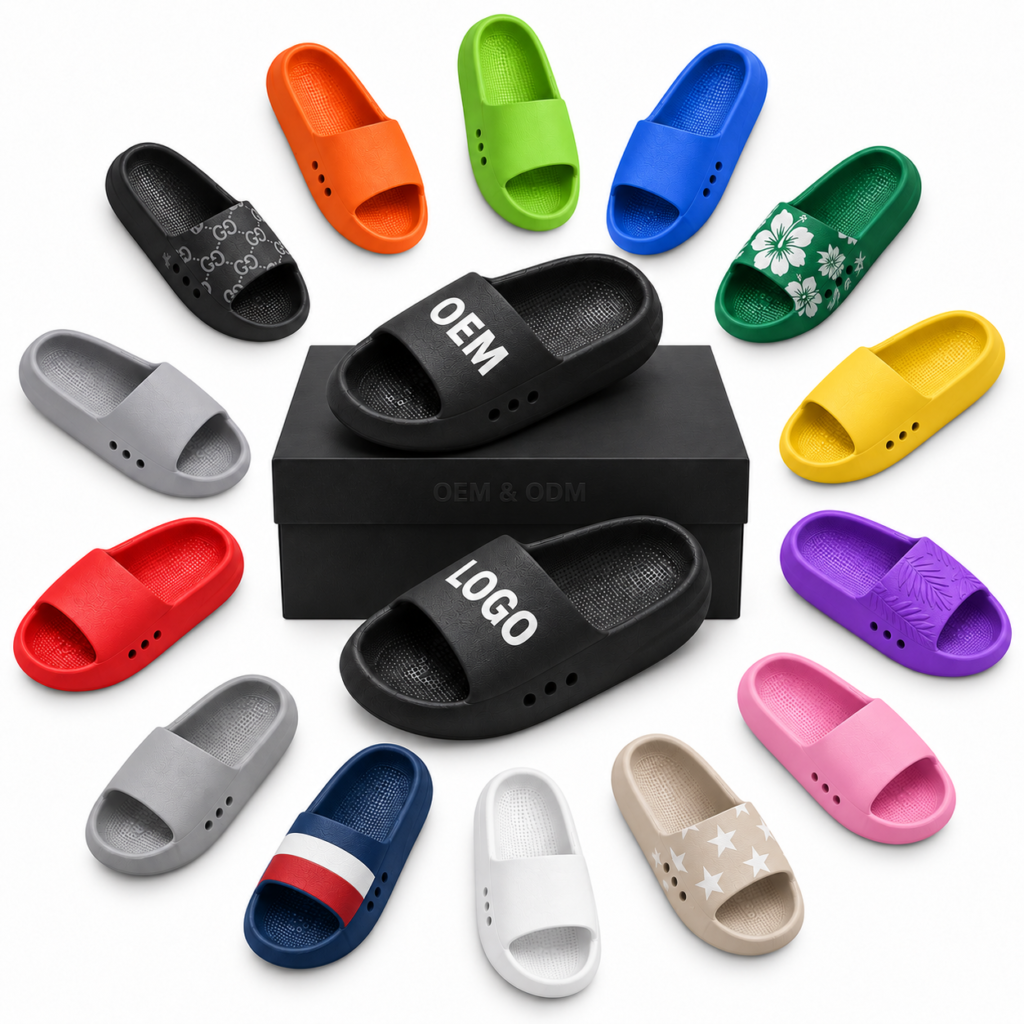
- Pantone-matched colors
- Printed, embossed or molded logos
- Custom patterns and original artwork
- Upper and sole material combinations
- Sole thickness and hardness
- Adult and children’s size ranges
- Woven labels and printed insoles
- Hangtags, bags, boxes and private-label packaging
The available logo method depends on the surface and material. Screen printing, heat transfer, embroidery, embossing and molded logos are not equally suitable for every construction. Buyers should provide vector artwork and confirm the logo size, position and color during sampling.
OEM vs. ODM Slipper Manufacturing
| Production model | Best suited to | Buyer normally provides | Factory support |
|---|---|---|---|
| OEM | Brands with a finished design | Drawings, specifications, artwork or a reference sample | Sampling and production according to the approved design |
| ODM | Buyers who need product-development support | Target market, style direction, price range and branding | Existing models, material suggestions and design adaptation |
| Private label | Buyers seeking a faster launch | Logo, colors, packaging and quantities | Customization of an existing slipper model |
Before requesting a quotation, buyers should clarify whether they need simple private-label customization or a completely new product. This distinction directly affects tooling cost, MOQ, sample time and production lead time.
Quality Control for Custom Slippers
A useful quality-control plan should be agreed upon before production rather than after the goods are completed.
Important inspection points may include:
- Material and color comparison against the approved sample
- Size measurements and fitting consistency
- Left-and-right pair matching
- Logo position and printing quality
- Bonding, stitching and finishing
- Sole flexibility and abrasion resistance
- Packaging, labels, barcodes and carton markings
- Final random inspection before shipment
Performance testing should be selected according to the product and destination market. Depending on the slipper construction, buyers may request tests for slip resistance, sole bonding, flexing, abrasion, colorfastness or restricted substances.
For products sold in the European Union, buyers should also consider REACH chemical requirements and footwear material-labelling rules. Requirements vary by market and product category, so testing and documentation should be confirmed before production begins.
A Typical Custom Slipper Production Process
| Stage | Main work |
|---|---|
| Requirement review | Confirm style, quantity, materials, size range, logo and destination market |
| Quotation | Calculate product, tooling, packaging and shipping-related costs |
| Design confirmation | Approve colors, artwork, logo position and packaging |
| Sampling | Produce and review a physical sample before mass production |
| Pre-production approval | Confirm the final specifications and approved sample |
| Bulk production | Manufacture according to the confirmed order |
| Inspection | Check product quality, quantity and packaging |
| Shipment | Prepare export cartons and shipping documents |
Changes made after sample approval can affect both cost and delivery time. Buyers should therefore confirm all specifications in a written product sheet or purchase order.
DERAN Custom Slipper Manufacturing
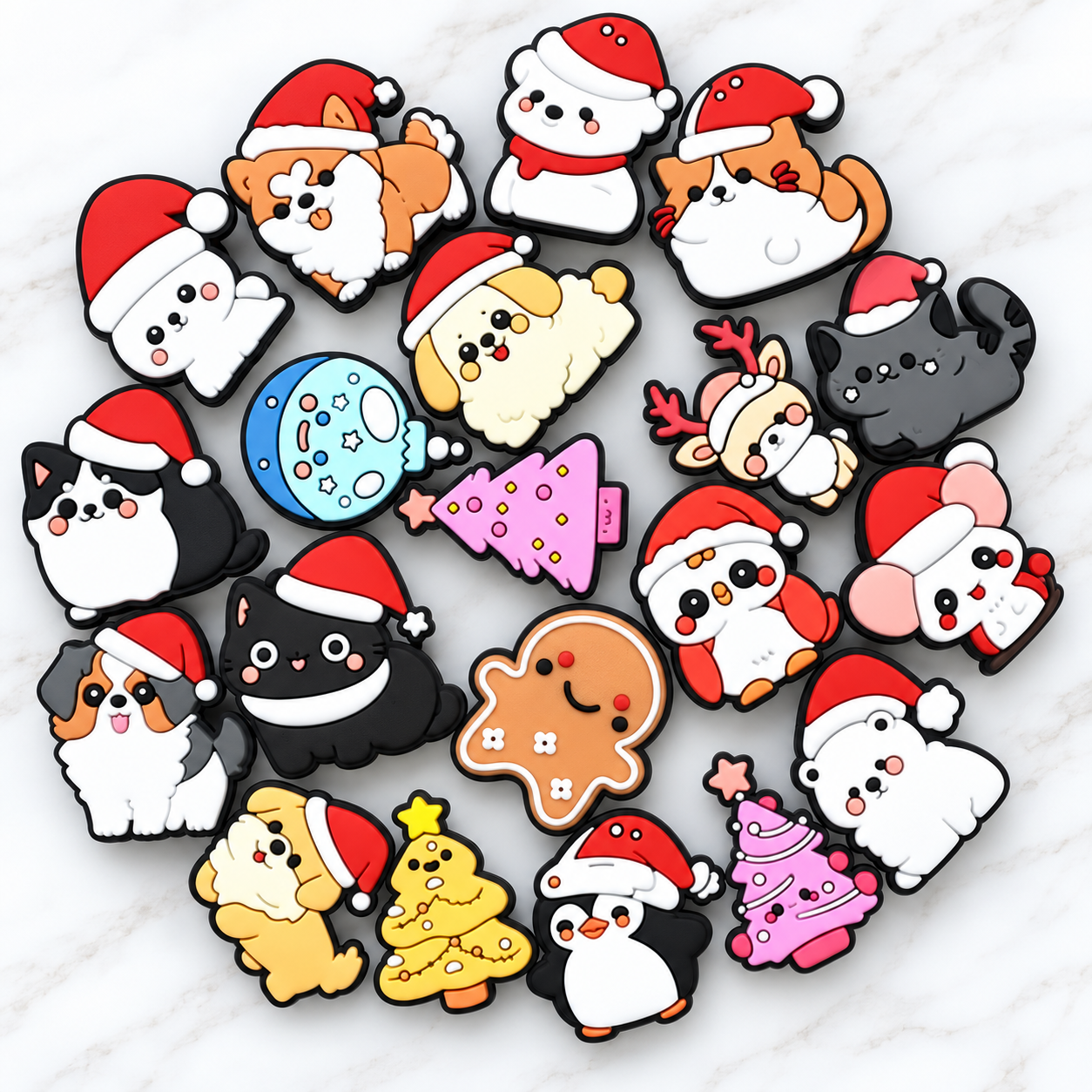
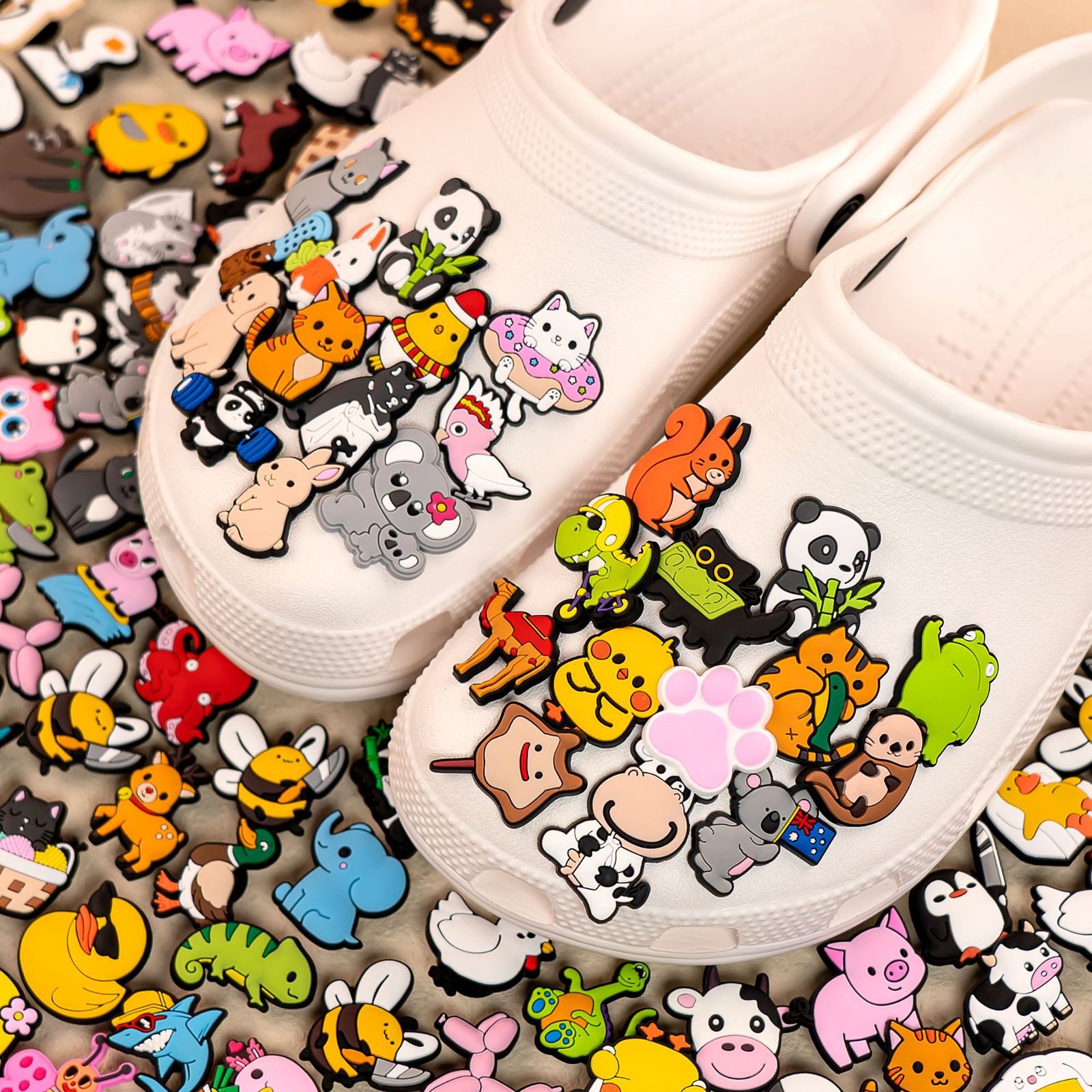
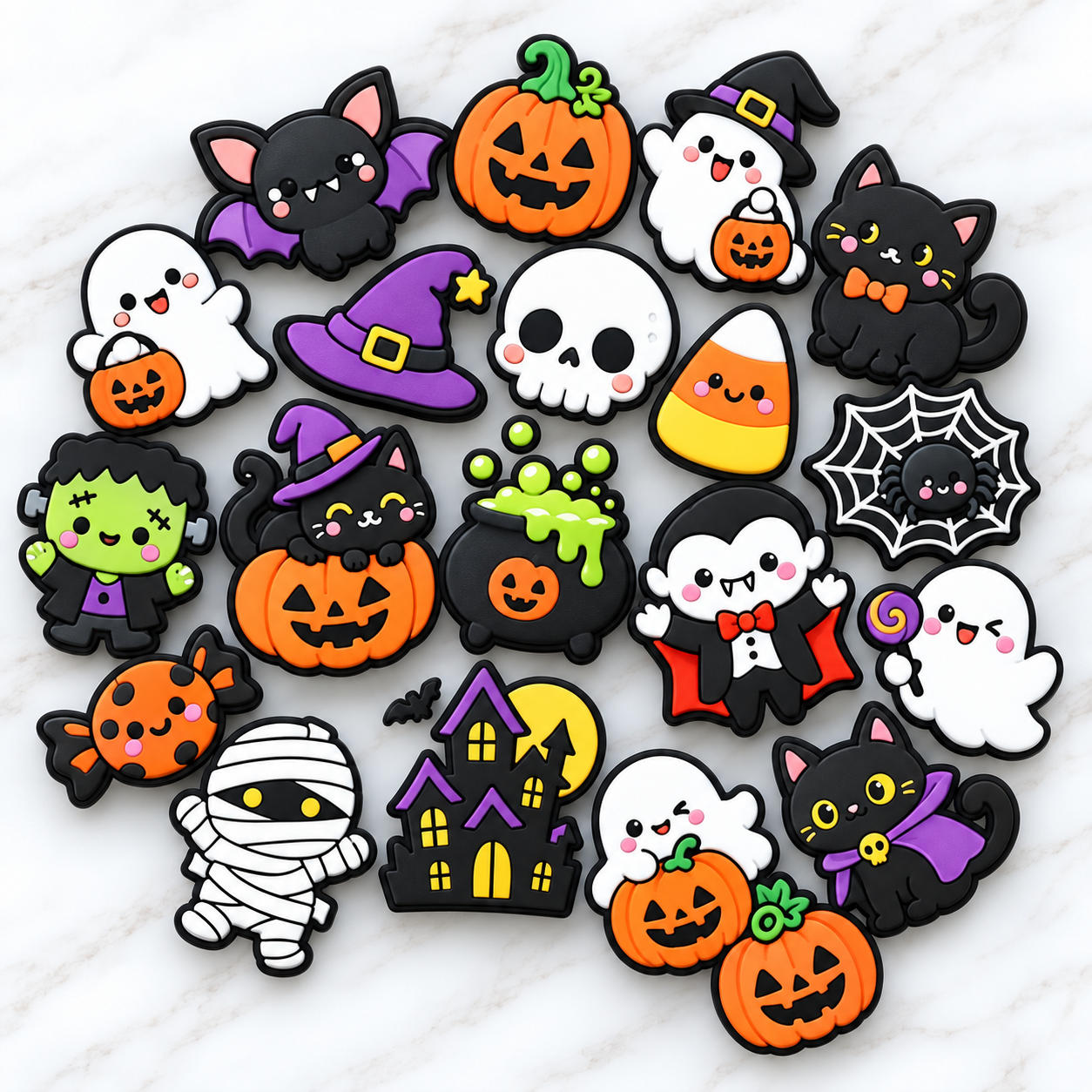
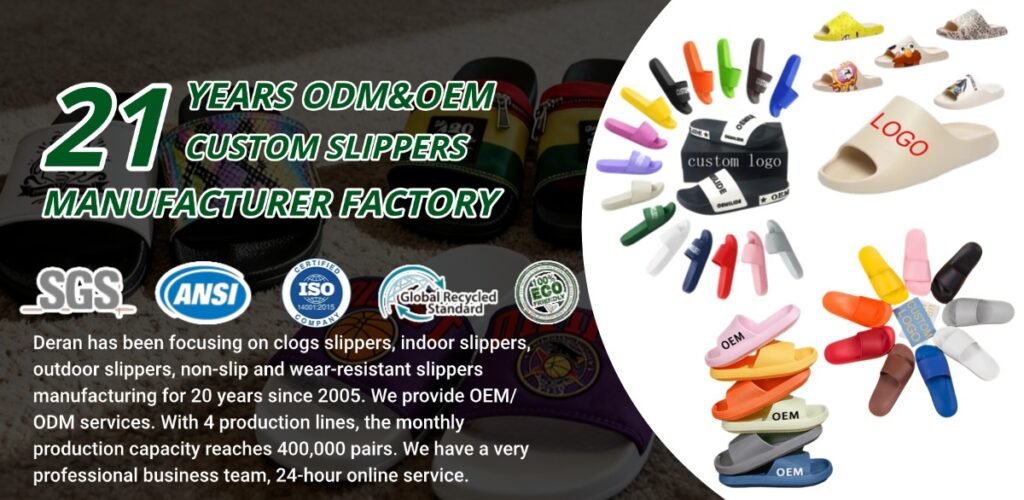
DERAN is a custom footwear manufacturer in China with manufacturing experience dating back to 2005. The company supplies slippers, EVA clogs, flip flops, slides and shoe charms to international buyers.
DERAN supports OEM, ODM, wholesale and private-label projects for brands, distributors, retailers and importers.
| DERAN manufacturing information | Details |
|---|---|
| Manufacturing experience | Since 2005 |
| Production lines | 4 |
| Monthly production capacity | Approximately 400,000 pairs |
| Services | OEM, ODM, wholesale and private label |
| Customization | Materials, colors, logos, artwork, labels and packaging |
| Typical sample time | Approximately 5–7 days |
| MOQ | Varies by product design and customization |
| Bulk lead time | Confirmed according to quantity and project requirements |
Buyers may choose from existing designs or discuss a new product based on their specifications. Physical samples can be prepared before mass production to confirm materials, colors, sizing, logo placement and overall appearance.
How to Evaluate a Slipper Manufacturer
Before selecting a supplier, ask for information that can be verified and compared.
A serious manufacturer should be able to answer the following questions:
- Does the factory manufacture the required slipper construction?
- Which production processes are completed in-house?
- What is the MOQ for the selected model and customization?
- Is a new mold required?
- How long will sampling and mass production take?
- What quality inspections are included?
- Can third-party testing or inspection be arranged?
- Who owns the custom mold and artwork?
- What happens if bulk production differs from the approved sample?
- Can the factory support repeat orders with consistent specifications?
Production capacity is useful, but it should not be considered alone. A large capacity does not automatically guarantee quality. Sample accuracy, specification control, communication and repeat-order consistency are equally important.
Information Needed for an Accurate Quotation
To receive a useful quotation, provide the manufacturer with:
- Product photos, drawings or reference samples
- Required materials and construction
- Estimated order quantity
- Size and color breakdown
- Logo artwork and application method
- Packaging requirements
- Destination country
- Required testing or compliance standards
- Target delivery date
If some specifications are not yet confirmed, provide the target market and expected price level. The manufacturer can then recommend suitable existing models and customization methods.
Start Your Custom Slipper Project
Working with an experienced custom slippers manufacturer in China can simplify product development, private-label production and repeat wholesale sourcing.
DERAN provides support from product selection and sampling through bulk manufacturing and packaging. To request a quotation, send your preferred slipper style, quantity, size range, logo, packaging requirements and destination market. These details will help the factory recommend the most suitable production solution for your project.