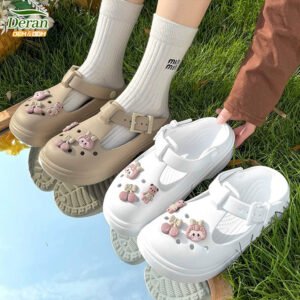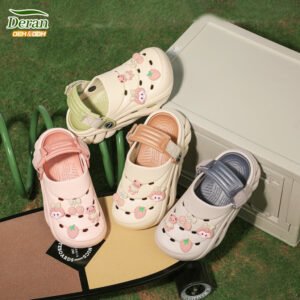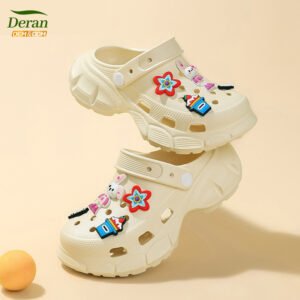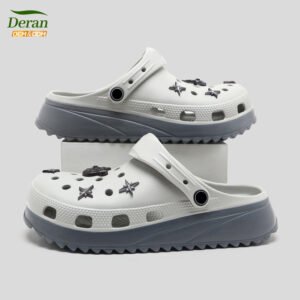
Every clog on the market — from a $3 garden clog to a $50 nurse clog — starts the same way: a plastic pellet melted, injected into a steel mold, and popped out seconds later. The process is called EVA injection molding, and the differences between a good clog and a bad one are decided in the details of that process.
We have run a footwear factory in Quanzhou, China since 2005, producing clogs, slippers, and accessories. This is how custom clogs are actually made on our floor, written so you can evaluate any factory you talk to.
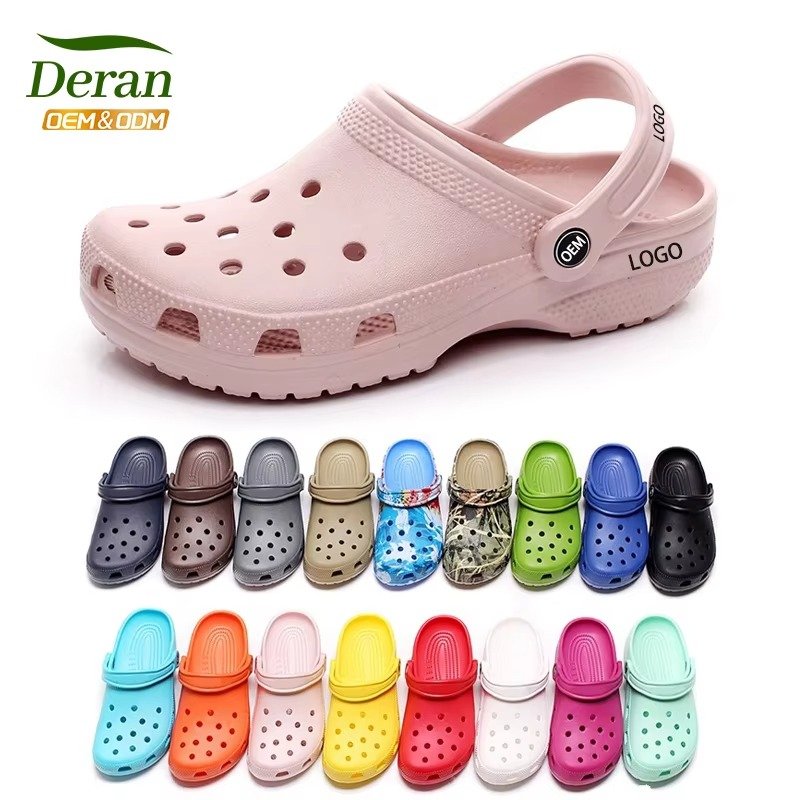
Step 1: Design and mold making
Your design starts as a 2D drawing, a 3D file, or a physical sample to copy. The factory converts it into a mold: a steel tool with the shoe cavity cut into it, in the sizes you need (usually one mold holds several sizes or a size range).
What matters at this stage:
- Mold steel quality and finish — polished cavities produce smooth surfaces; rough molds leave texture on the shoe.
- Mold cost and ownership — EVA clog molds run US$400–2,000 per style. You should own the mold; ask and get it in writing.
- Size range per mold — a mold can often hold 2–4 sizes. Your price per pair depends partly on how many molds your size range needs.
Mold-making takes 7–10 days. We photograph every mold before production and send the photos with the sample.
Step 2: Material preparation
Clogs start as EVA resin pellets mixed with:
- Foaming agent — creates the bubbles that make EVA light and soft.
- Cross-linking agent — gives the foam its bounce and shape memory.
- Color masterbatch — the pigment, mixed in before injection.
The mix is weighed per batch and loaded into the injection machine. Two things to verify with any factory:
- Virgin vs recycled material. Recycled EVA is cheaper and looks fine initially but yellows, loses bounce, and shows inconsistent color. Ask which you are getting.
- Hardness spec. The standard for comfortable clogs is 40–45° shore hardness. Softer foam wears out; harder foam feels stiff.
Step 3: Injection molding
The pellet mix is heated to a viscous state and injected into the closed mold under pressure. The mold is then:
- Heated to activate the foaming agent — this is what makes the shoe expand and fill the cavity.
- Held at temperature while the foam cross-links and sets.
- Cooled and opened — the finished clog is ejected, still warm.
A single injection cycle takes a few minutes per mold set. This is why EVA production is fast: one machine can produce hundreds of pairs per shift.
Step 4: Trimming and finishing
Every clog comes out of the mold with flash — thin excess material along the mold seam. Workers trim it, then:
- Hole punching — the ventilation holes (the signature of Crocs-style clogs) are punched or molded in, depending on the mold.
- Surface finishing — rough edges sanded, surface checked.
- Sole pattern — grip texture is molded in or added.
Trimming quality is where cheap factories cut corners. Run your finger along the seam of a sample: rough edges mean rushed trimming, and rough edges show up in customer reviews.
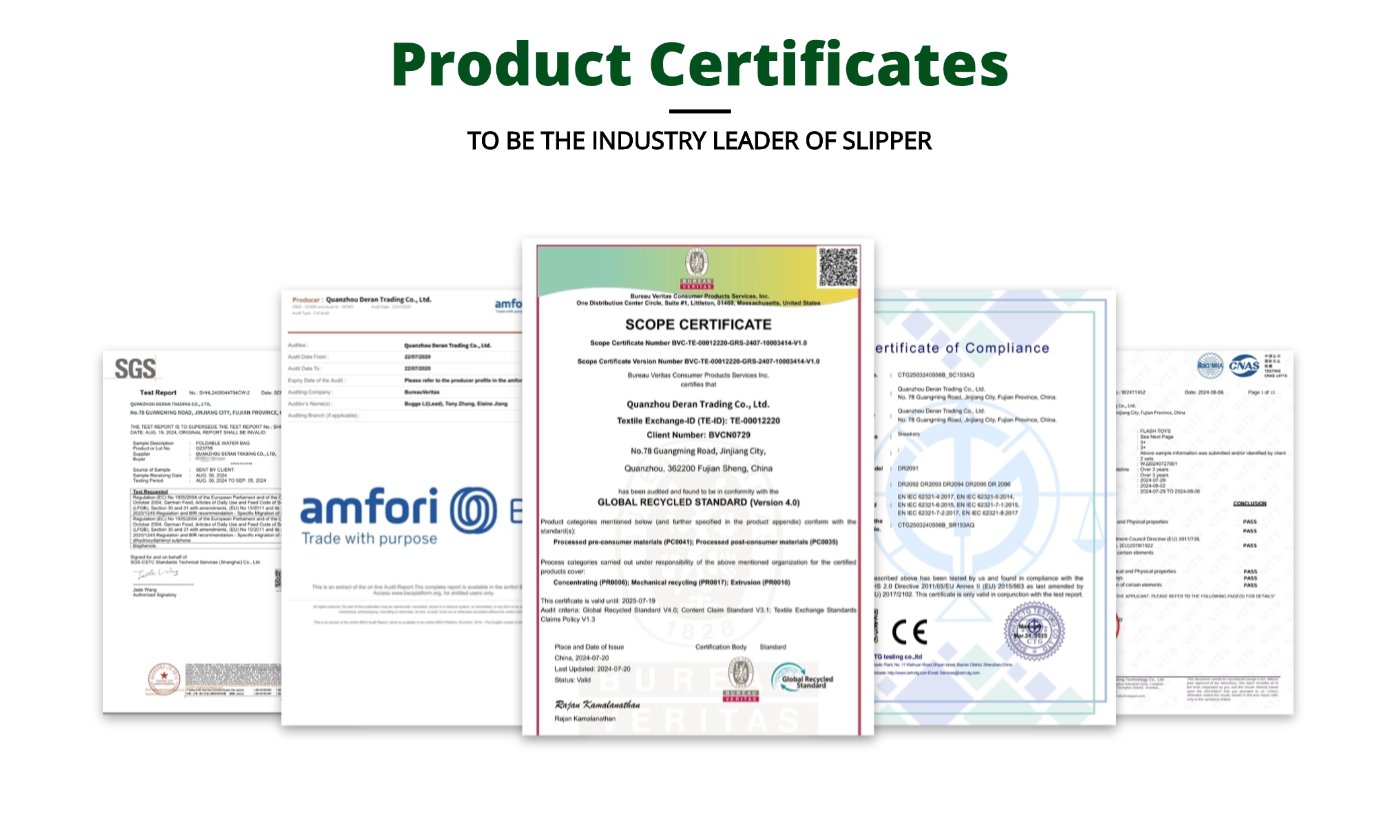
Step 5: Quality control and packing
Before packing, each batch passes:
- Visual inspection — color consistency, surface defects, complete fill, clean seams.
- Fit check — a sample of each size is checked against the size last.
- Flex and density test — the shoe should bounce back after flexing; a dead-feeling sample means under-cross-linked foam.
- Count and pack — pairs are boxed or poly-bagged per your spec.
We quote a defect rate below 1% and replace defective pairs on the next shipment. That is not automatic in this industry — ask for your supplier’s number.
What to check when your samples arrive
- Seam smoothness — run a finger along the mold seam. Rough = rushed trimming.
- Color match — compare against your approved color; EVA color should be consistent across the pair.
- Flex test — bend the clog and release. It should spring back without cracking or whitening at the fold.
- Weight — a pair that feels suspiciously light usually means under-foamed material that will compress fast.
- Fit — try the sample or compare to your size spec before approving bulk.
How long does production take?
- Mold + sample: 12–17 days
- Bulk production: 10–15 days after sample approval
- Sea freight to US/EU: 25–40 days
A full custom order from file to US warehouse: 8–10 weeks. Stock-style orders (existing molds, your color) skip the mold stage and cut 7–10 days off the front.
FAQ
What is EVA injection molding?
A process where EVA pellets are melted with a foaming agent, injected into a steel mold, and expanded by heat into a finished shoe shape. It is how most clogs, slides, and foam footwear are made.
How much does a clog mold cost?
US$400–2,000 per style depending on size and complexity. You should own the mold — confirm ownership before ordering.
Why do some clogs turn yellow?
Yellowing comes from recycled material or UV degradation of low-grade EVA. Virgin EVA with UV stabilizers resists it far better.
What is the difference between EVA and rubber clogs?
EVA: light, cheap, waterproof, less durable. Rubber: heavy, expensive, better grip and wear. Nurse and work clogs often use rubber or rubber-blended outsoles.
Can you make kids’ clogs with printed characters?
Yes. Printed characters and matching shoe charms are a strong category for us — many buyers order both from the same factory.
Related reading: How to source custom clogs from China · Custom clogs OEM&ODM · Custom croc charms
Deran (clogsslipper.com) has manufactured clogs, slippers, and footwear accessories in Quanzhou, China since 2005 — 4 production lines, 4,000 m², 400,000 pairs monthly capacity. We produce custom EVA clogs, garden clogs, nurse clogs, and shoe charms under OEM/ODM. Ask us for physical samples — we send samples, not photos.
发布说明:工艺描述基于工厂实际生产流程;具体参数以当次询盘报价为准。